
Thursday, Aug 20, 2026
Chasing Damselflies: Indicator Insects and the Power of Community Science
Written by Hannah Jacobowitz, Michigan Nature Association
All photos courtesy of Peter Martin
In the fall of 2024, Michigan State doctoral student Peter Martin set out to answer one question – how does a changing climate shape the organisms that live in it?
As part of the Department of Integrative Biology’s Ecology, Evolution and Behavior Program, Martin had just begun his first semester working under Dr. Alisha Shah at MSU’s W.K. Kellogg Biological Station, as part of an ecophysiology lab focused on studying how natural patterns of climate variation, as well as key variables like temperature and oxygen availability in an aquatic environment, influence the traits of organisms and their potential vulnerability to a changing climate.
And from the beginning, Martin had his sights set on investigating one habitat type in particular.
“I knew from a very early time point that I wanted to work with vernal pools,” said Martin. “I had read a lot about these systems… [and] I’d been around these really special types of freshwaters. I knew they were amazing, and I knew I wanted my work to have a focus on [them].”
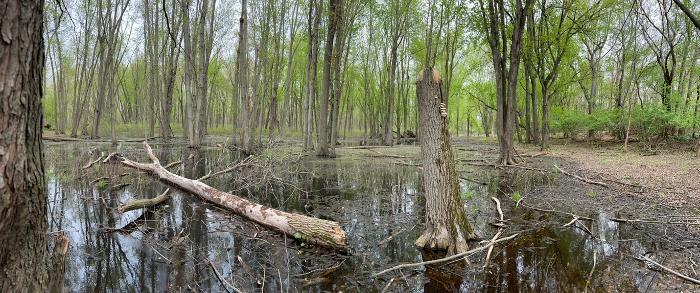
All that was left was to decide which species to focus on – a decision that came down to a number of factors, including ecological importance, locatability, and ease to work with in both lab and field environments. And one species in particular stood out as the perfect choice: the spread-winged damselfly (genus Lestes), of which no previous body of work existed regarding the effects of temperature and oxygen availability.
Beyond embodying these key criteria for study, damselflies are also an especially useful species to observe when investigating freshwater habitats. Due to the fact that they are aquatic as larvae but terrestrial as adults, these insects provide a crucial link between the aquatic environment and the surrounding terrestrial environment, acting as key bridges capable of shuttling nutrient and energy subsidies between the two habitat types. Additionally, as key predators in their ecological networks in both aquatic and terrestrial life, their predation can also impact which species are able to occur in both the freshwater and terrestrial food webs they occupy.
Damselflies are also valuable as bioindicator species – as they are especially sensitive to changes in their environment, they can often be indicative about how larger ecological communities might respond to conditions in the future.
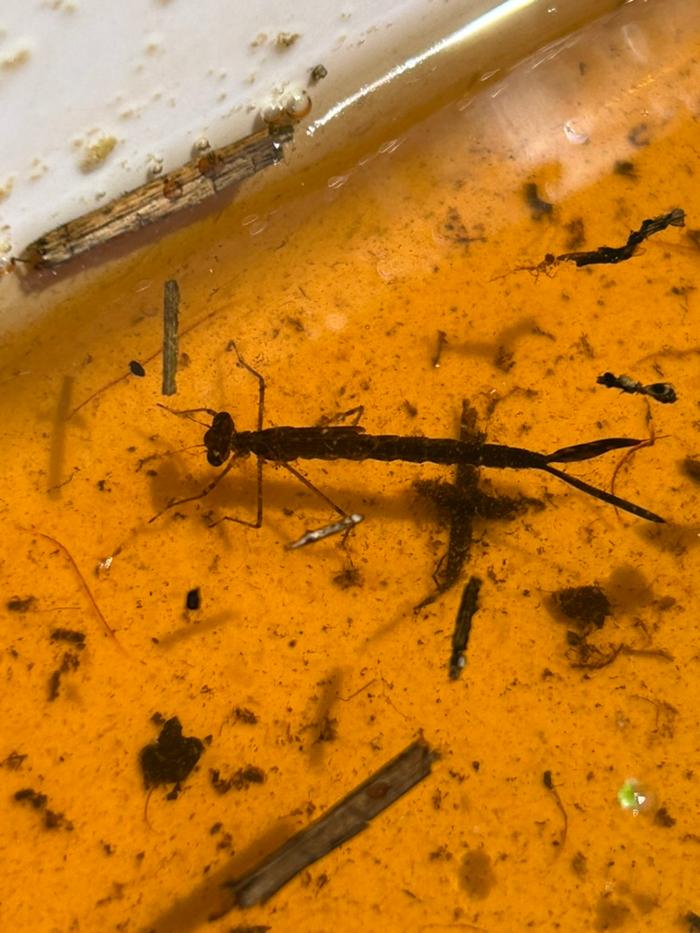
“These species are important in and of themselves, but they also are really key canary in the coal mine species for freshwater food webs as a whole,” said Martin.
The project itself focuses on two main variables – oxygen availability and temperature – and how changes in these variables shape the physiological and morphological traits of Lestes damselflies across distance and time.
This genus of damselfly in particular is especially useful in studying these variables, as they occur across a gradient of still freshwater habitats – commonly referred to as the pond permanence or hydroperiod gradient – that vary in whether or for how long they become dry throughout the year. This gradient ranges from permanent lakes that remain perpetually aquatic, to vernal pools which undergo annual cycles of refilling and drying.
There is consistent variation in both temperature and oxygen availability across the gradient, with permanent lakes being more stable in temperature, as well cooler on average than the more ephemeral, warmer vernal pools. Vernal pools also have significantly lower oxygen concentrations to begin with than permanent lakes, due to their still, shallow nature and high rates of decomposition.
So far, Martin has sampled Lestes damselflies from three sites that fall into each of the permanence gradient’s three possible categories – meaning three permanent lake sites, three vernal pool sites, and three semi-permanent wetland sites with a very long hydroperiod (meaning there is variability in whether they will dry out in any given year). This gradient offers an invaluable opportunity to discern how oxygen availability in aquatic environments shapes both the traits of these damselflies, and the locations in which they occur.
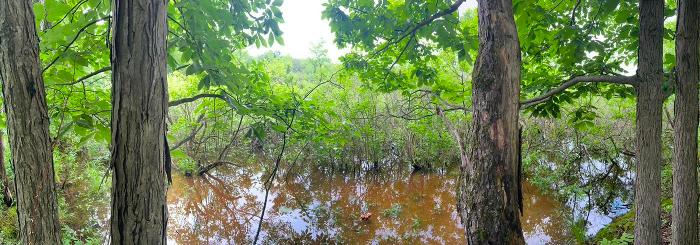
Figuring out which sites will yield the best chances of success can be difficult – which is where the Michigan Vernal Pool Patrol comes in.
In order to assist with Martin’s study, training materials were distributed to coordinators and volunteers on how to distinguish odonates (dragon and damselfly species) from other groups of aquatic macroinvertebrates, and a new section was added to the standard Pool Patrol data form to record data on their presence and number.
“One of the immediate problems that Alicia and I ran into when we wanted to start work on this system was that these damselflies, we know they occur in Michigan, but they're very patchily distributed,” said Martin. “They are very abundant where they occur, but there hadn't been real research done with this group in Michigan prior to my work. [So] without a baseline knowledge of where it's easy to find these damselflies and where they occur in numbers, it can be really difficult to start experimental work.”
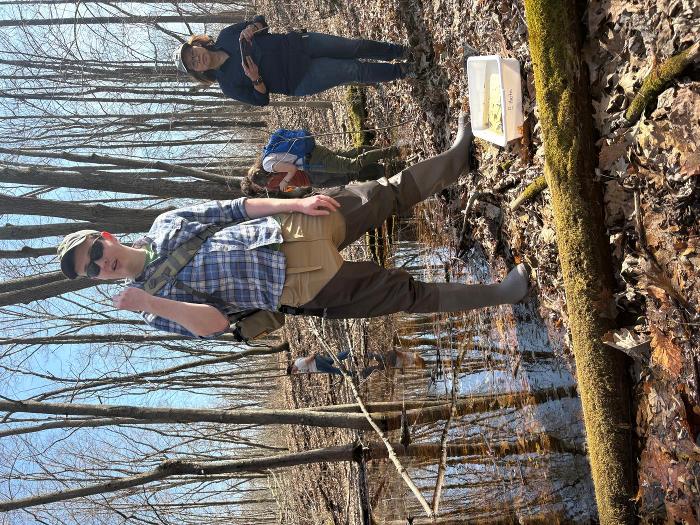
Volunteer data can help turn the tables, providing abundant baseline evidence on which locations are likely to be ideal for study.
“So many potential sites have been identified by the wonderful work of these volunteers and coordinators. Over the next couple of field seasons as I have time, I'm really looking forward to exploring some more sites, but already the data has been so helpful in our research – it's made so many things possible,” said Martin.
So far, approximately 40 sites in Michigan have come back with reports of damselfly presence, giving Martin a wide array of potential areas to explore. He currently visits a small subset, at least half of which have been informed directly by Vernal Pool Patrol data.
And the results?
“While we still need to do a lot of fine-tuning of the modeling, what we're finding is that indeed, just as we hoped [and] predicted might be the case, temperature and oxygen availability at geographic scales shape the distributions of Lestes damselflies,” said Martin.
Across Michigan, there have been noticeable, distinct trends in different groups of damselflies that specialize for different parts of the permanence gradient, and the distributions of those groups seem to have been shaped by the oxygen availability and temperature of their aquatic habitat. There also seem to be stark trends through time, in terms of where these damselflies have occurred over the past 40 years.
Overall, current data indicates that while trends for permanent lake and pond specialist damselflies have remained relatively stable, wetland and vernal pool specialists are not doing nearly as well.
The research has also found that between either end of the gradient, there are key larval traits – such as the surface area of the gills, the capacity of the gills to perform oxygen exchange with the water, and upper thermal limits and metabolic rates – which shift based on naturally available oxygen and temperature variability, and which may be considered informative for predicting how these species will respond to climate change.
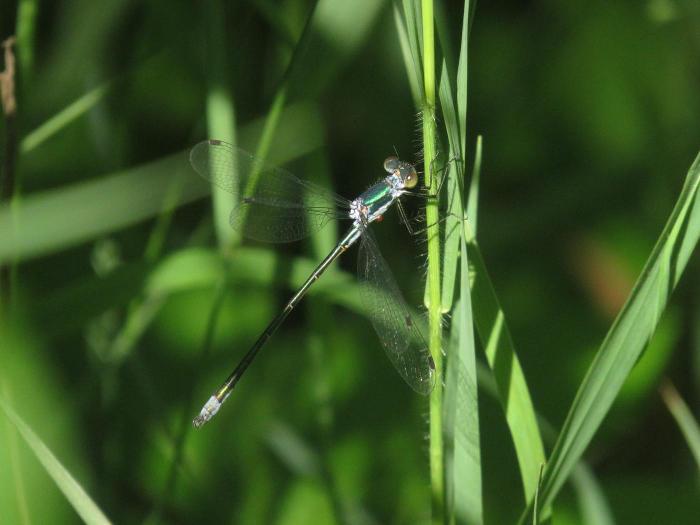
“Lestes damselflies weren't really regarded as a group that was declining prior to this work… and so I think what [the data] shows is that there is this hidden biodiversity loss that might be happening in the state, that isn't readily visible because these species are reclusive, and because they occur in these habitat types that are not well-studied,” said Martin.
The correlation between damselfly presence and water oxygen and temperature also has potential implications for how likely it is that these same two abiotic factors are also helping shape the traits of other freshwater organisms in potentially similar ways, therefore possibly predisposing these other groups of organisms to the same patterns of vulnerability that are impacting damselfly populations.
There are several factors that can determine oxygen availability in water, including the temperature of the environment (warmer water on average is able to hold less oxygen than cooler water), as well as nutrient inputs into freshwater habitats from fertilizers, runoff, and agricultural landscapes. These added nutrients can stimulate harmful algal blooms, which will eventually decompose in a process that further depletes the water’s oxygen. The rate of decomposition is also temperature dependent, meaning that as the water warms, respiration and decomposition increases.
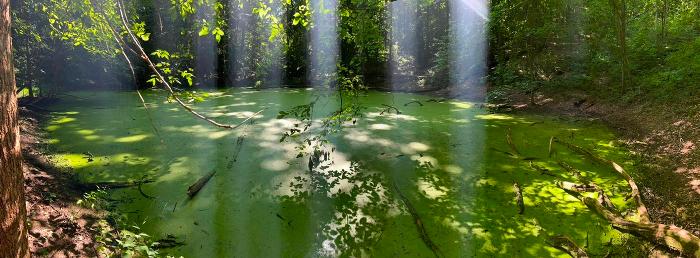
A global trend towards deoxygenation is actively being documented in northern temperate lakes, where we can see across large timescales that average trends in oxygen availability and oxygen concentrations in lakes are declining – and vernal pools, which are much shallower and tend to have a much smaller surface area, higher decomposition rates, and lower starting oxygen levels, are especially vulnerable to these trends.
But though the implications of this data may not be ideal, the act of being able to gather it has been a vital and encouraging achievement.
“What it also shows is that the work of organizations like the [Vernal Pool] Partnership is so valuable,” said Martin. “The active efforts to restore, conserve, map, and monitor systems like vernal pools that are ephemeral, that are imperiled, that are vulnerable to climate change – that work is vital to the preservation of natural resources into the future. And so I think it really highlights the need for programs like the Partnership that have directly made the study that we're working on possible.”
.JPG)
According to Martin, community science work not only has the capacity to aid crucial research, but also to actively affect change in the world around us.
“Especially in such an uncertain time in our world, I think there's so much power, and there's so much good that can be done at the local level – in getting involved locally, with organizations that span either your state or that occur in your local county, that are really working to make a difference, and to conserve the types of natural habitats that all of us rely on in one way or another and that shape the world we live in,” said Martin.
“I'd encourage anyone who maybe has heard about [the Vernal Pool Patrol] but isn't involved yet, to take a look into it, because I think that one of the greatest single things that the average community member can get involved with is this type of community science work that directly does good for the world.”